Dark and Darker Arena Season 4 begins on October 30, 2026, during Early Access Season 11, which started on October 9. The two seasons use separate numbering, and the Season 11 announcement already listed the Arena start date.
Before spending gold on upgrades, work out how you plan to enter and inspect the equipment you already own. A little preparation here can save you from buying a piece you do not need—or bringing something you are not prepared to risk.
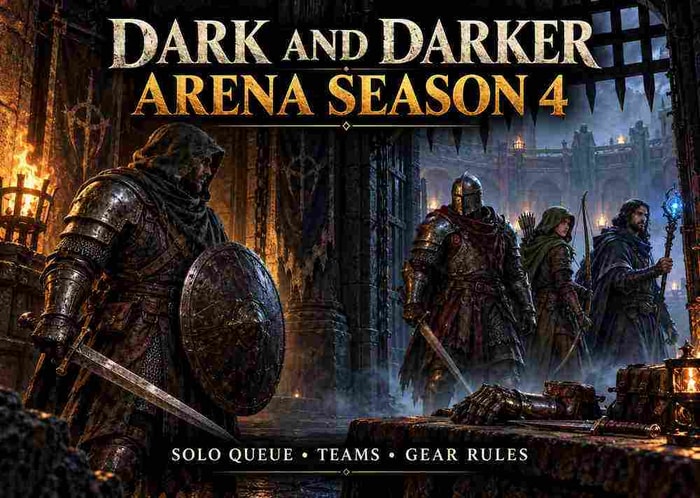
Solo Queue and Premade Teams
Hotfix #130 separates Arena entry into two queues:
| Queue | How you enter |
|---|---|
|
Individual Arena |
Enter alone. |
|
Party Arena |
Enter with a premade team of three. |
A pair needs a third player for Party Arena. “Solo queue” describes entry; it should not be read as confirmation of a 1v1 format.
If you are playing alone, pick a familiar class and give the session one clear goal: improve your weapon spacing, find better positions before casting, or stop chasing fights into bad angles. Changing your class, weapon, and playstyle at once makes it harder to work out why a match went poorly.
For a premade team, agree on the basics before anyone queues. Who starts the fight? Who applies pressure from range? Who needs room to cast or recover? Choose a setup all three players understand before worrying about a supposedly perfect class combination.
Which Gear Do You Keep After an Arena Loss?
The retention check now applies across your account. Qualifying gear found or crafted by any of your characters is kept after an Arena defeat, even when another character uses it.
For example, gear your Fighter found can qualify for your Cleric, provided the Cleric can equip it. This does not make every item you own eligible.
Start by checking the gear across your characters. Identify the pieces that fit your current build and the slots that still need an upgrade. If you decide to shop for additional Dark and Darker items, focus on pieces that fill those specific gaps.
Check Who Found or Crafted Your Gear
Look for the character name on the “Found by” or “Crafted by” line in the item tooltip. A green name identifies a character on your account, including a deleted character. This refers to the attribution name, not the item's rarity color.
Inspect each equipped piece rather than checking only your main weapon. Give small upgrades the same attention as expensive ones. A ring swapped in at the last minute is easy to overlook when you have already spent ten minutes comparing weapons.
Buying or receiving an item does not automatically make it eligible for Arena retention. Check whether the character named in its “Found by” or “Crafted by” line belongs to your account.
If you are unsure whether an item qualifies, set it aside until you have checked its source. There is no need to turn your first match into a test of what happens to your most expensive item.
Plan Your Gear Upgrades
Build a workable starting kit, then decide what it actually needs. Write down one purchase you are considering and the problem it is meant to solve. Are you struggling to survive an opening exchange? Do your attacks miss because you are uncomfortable with the weapon? Are you choosing positions that leave no room to retreat?
Those problems call for different responses. Better equipment may help with the first; practice or a different approach may do more for the others. Avoid treating every defeat as proof that you need a more expensive loadout.
Set a spending limit before browsing upgrades. Keep some Dark and Darker gold in reserve for later adjustments, and change one major piece at a time so you can judge whether it improves your setup.
Use Clear Calls With Your Team
For a three-player group, short calls are easier to act on than a running commentary. Agree on a few before the first match:
- Target: Identify the opponent you want the group to pressure.
- Position: Say where you are moving and whether you need someone to follow.
- Recovery: Call out when you need a moment before committing again.
Describe what you can do next. “Backing up to heal” gives your teammates a decision to make; “I am in trouble” leaves them guessing. Likewise, call a push before moving so the other two players have time to decide whether they can support it.
After a loss, discuss the first decision that put the team at a disadvantage. Did someone engage before the others were ready? Did two players chase different targets? Was a retreat call missed? Pick one adjustment for the next match instead of rebuilding all three characters at once.
Review Your First Few Matches
Take a screenshot of your starting loadout and note one thing you want to improve. After a few matches, use that record to judge whether the problem is equipment, positioning, or coordination. Make the next change for a specific reason.