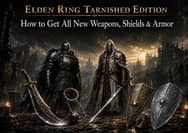
Elden Ring Tarnished Edition introduces two new starting classes: Heavy Knight and Idus Knight. Heavy Knight favors heavier equipment and powerful melee attacks, while Idus Knight focuses more on Dexterity, mobility, and faster weapons.
Your starting class matters most during the first part of the game. It affects which stats you should level first, which weapons are worth upgrading, and how quickly your preferred build comes together.
This guide gives you a practical starting route for both classes, including stat priorities, early progression, gear direction, boss preparation, and comparisons with classic Elden Ring classes.

⚔️ Heavy Knight vs Idus Knight at a Glance
| Category | Heavy Knight | Idus Knight |
| Main Style | Heavy melee | Fast melee |
| Build Direction | Strength | Dexterity |
| Armor | Heavy | Light |
| Mobility | Lower | Higher |
| Survivability | Excellent | Good |
| Beginner Friendly | Excellent | Very Good |
| Best For | Strength builds | Dexterity builds |
| Similar Class | Vagabond / Hero | Samurai / Warrior |
Choose Heavy Knight if you want strong survivability, heavy weapons, stagger damage, and straightforward melee combat.
Choose Idus Knight if you prefer fast weapons, dodging, mobility, and Dexterity-focused combat.
For first-time players, Heavy Knight is generally the easier starting choice.
🛡️ Heavy Knight Starting Build
Heavy Knight works best as a focused Strength melee character. During the early game, however, survivability and weapon upgrades are more valuable than putting every level into Strength.
📊 Heavy Knight Stat Priority
Follow this order:
Vigor → weapon requirements → Endurance → Strength
A practical progression looks like this:
Early Game
Raise Vigor toward 20
Get only enough Strength or Dexterity to meet your main weapon requirements
Add Endurance if stamina or Equip Load becomes uncomfortable
After Vigor 20
Start increasing Strength
Continue Vigor toward 25–30
Add enough Endurance to use your preferred weapon and armor comfortably
Mid-Game Direction
Vigor: 30+
Strength: main damage stat
Endurance: enough for stamina and equipment
Avoid spreading points into Intelligence, Faith, or Arcane unless you deliberately plan to change into a hybrid build.
🗺️ Heavy Knight Early-Game Route
Follow this route instead of immediately rushing toward Stormveil Castle.
Reach Gatefront and Unlock Torrent
Follow the early Sites of Grace toward Gatefront Ruins and unlock Torrent.
Getting Torrent early makes it much easier to explore Limgrave, collect upgrade materials, and reach optional locations.
Visit the Church of Elleh
Use the Church of Elleh as an early stop for basic supplies and nearby exploration.
You do not need to buy everything immediately. Save your early resources for items that actually improve progression.
Explore Gatefront Ruins
Loot Gatefront Ruins and use the soldiers there to get comfortable with the Heavy Knight's slower melee timing.
A simple combat pattern is:
Block or Dodge → Heavy Attack → Reposition
Avoid repeatedly attacking until your stamina is empty.
Improve Your Flask
Before fighting Margit, collect nearby Golden Seeds and Sacred Tears whenever possible.
Extra healing gives new players much more room for mistakes than a few additional points of damage.
Visit Limgrave Tunnels
Head to Limgrave Tunnels for early Smithing Stones.
Pick one reliable main weapon and prioritize its upgrades instead of spreading materials across several weapons.
For players who want a smoother early experience, using services like the option to buy Elden Ring items can help accelerate initial progression.
Prepare for Margit
By the time you challenge Margit, a beginner-friendly Heavy Knight should ideally have:
Around 20 Vigor
An upgraded main weapon
Improved Flasks
Enough Strength for the chosen weapon
A manageable Equip Load
This makes the first major boss much more forgiving.
🔨 Heavy Knight Weapon & Gear Setup
Heavy Knight naturally works with:
Greatswords
Curved Greatswords
Greataxes
Great Hammers
Colossal Weapons
You do not need the heaviest possible weapon.
During the early game, prioritize:
good stagger + manageable stamina cost + comfortable attack speed
For newer players, Greatswords or Curved Greatswords are generally easier to handle than very slow Colossal Weapons.
⚙️ Simple Heavy Knight Setup
Main Stats: Vigor / Strength / Endurance
Weapon: Starting weapon or reliable Strength-scaling melee weapon
Shield: Medium shield if needed
Load: Medium when possible
Ash of War: Physical or Strength-friendly option
Talismans: HP, stamina, Equip Load, or physical-damage support
Against stronger enemies and bosses, keep your rotation simple:
Wait for attack → Dodge or Block → Jumping/Heavy Attack → Reset
Heavy armor gives you more protection, but it should not encourage unnecessary hit trading.
🗡️ Idus Knight Starting Build
Idus Knight favors lighter equipment and Dexterity-focused melee combat. The class is better suited to players who prefer dodging and using shorter attack windows rather than absorbing hits.
📊 Idus Knight Stat Priority
Follow:
Vigor → weapon requirements → Dexterity → Endurance
Use this progression:
Early Game
Raise Vigor toward 20
Meet the requirements of your preferred weapon
Add Dexterity gradually
Increase Endurance only when stamina feels restrictive
After Vigor 20
Invest more heavily in Dexterity
Raise Vigor toward 25–30
Maintain a comfortable Equip Load
Mid-Game Direction
Vigor: 30+
Dexterity: main damage stat
Endurance: enough for attacks and repeated dodges
Keep the build focused instead of investing heavily across several offensive stats at once.
🗺️ Idus Knight Early-Game Route
Idus Knight can follow a similar map route, but your combat priorities are different.
Unlock Torrent Early
Reach Gatefront and unlock Torrent before doing extensive exploration.
Explore Gatefront and Nearby Limgrave
Collect early resources while practicing quick punish windows against normal enemies.
Do not trade hits.
Let enemies attack first, dodge, and punish the opening.
Choose One Dexterity Weapon Path
If the starting weapon feels comfortable, continue upgrading it.
Otherwise, Idus Knight can naturally move toward weapon families such as:
Katanas
Curved Swords
Light Greatswords
Thrusting Swords
Spears
Twinblades
Dexterity-focused Straight Swords
Choose one weapon family first rather than constantly switching between several options.
Collect Flask and Upgrade Materials
Pick up Golden Seeds and Sacred Tears while exploring, then use early Smithing Stones on your main weapon. Many players also gather additional resources such as Elden Ring runes to accelerate early leveling and weapon upgrades.
Build Enough Vigor
Try to reach 20 Vigor before Margit if you are still learning the game's combat.
Mobility helps you avoid damage, but enough HP ensures one missed dodge does not immediately end the fight.
Fight Margit with Short Punishes
Use:
Bait Attack → Dodge → 1–2 Hits → Reposition
The main advantage of a fast weapon is that you can safely attack during smaller openings.
Do not use that speed as an excuse to attack until your stamina reaches zero.
⚙️ Idus Knight Weapon & Gear Setup
A practical Idus Knight setup is:
Main Stats: Vigor / Dexterity / Endurance
Weapon: Fast Dexterity-scaling melee weapon
Armor: Light or medium
Shield: Optional
Load: Medium or lighter
Ash of War: Fast physical or Dexterity-friendly option
Talismans: Stamina, successive-attack, or general melee support
The core playstyle is:
Dodge → Punish → Reset
This is more important than trying to maximize the number of attacks in every opening.
🆚 Heavy Knight vs Vagabond
Heavy Knight and Vagabond both work well for melee progression, but Heavy Knight offers a more specialized path.
Choose Heavy Knight if you already want:
Strength-focused progression
Heavy weapons
Strong stagger
Heavier melee combat
Choose Vagabond if you want:
More Strength/Dexterity flexibility
Traditional sword-and-shield combat
More freedom before deciding your final build
Heavy Knight does not replace Vagabond. It simply gives Strength players a more direct starting direction.
🆚 Idus Knight vs Samurai
Samurai is the most natural comparison for Idus Knight because it already offers a strong Dexterity-oriented start.
Choose Idus Knight if you want:
Faster melee combat
Lightweight equipment
Dexterity progression
Freedom to explore several Dex weapon families
Choose Samurai if you specifically want:
Katana gameplay
Early Bleed
Bow utility
A familiar starting route
Idus Knight is therefore more attractive for players who want a Dexterity character without simply repeating the traditional Samurai path.
🔄 Do Heavy Knight and Idus Knight Change the Starting Route?
The new classes change build progression more than map progression.
Both still benefit from the same basic early priorities:
Torrent → Flask upgrades → one main weapon → Smithing Stones → Vigor → Margit
The difference is what happens around that route.
Heavy Knight can develop directly toward Strength-heavy melee, while Idus Knight can move immediately into Dexterity-focused weapons.
This reduces some of the early setup normally required to make those playstyles feel complete.
📋 Heavy Knight & Idus Knight Starting Checklist
If you want one route to follow, use this:
Reach Gatefront and unlock Torrent.
Visit the Church of Elleh.
Explore Gatefront Ruins and nearby Limgrave.
Collect useful Golden Seeds and Sacred Tears.
Choose one main weapon.
Visit Limgrave Tunnels for Smithing Stones.
Upgrade your main weapon first.
Raise Vigor toward 20.
Meet your main weapon requirements.
Keep a manageable Equip Load.
Challenge Margit when your weapon, HP, and Flasks are ready.
Continue Vigor toward 25–30 while developing Strength or Dexterity.
Following this route helps prevent three common early-game mistakes: low HP, wasted upgrade materials, and scattered stat investment.
🏆 Which Class Should You Choose?
Choose Heavy Knight if you are new to Elden Ring or already know you want a Strength-focused melee build. Its simple Vigor, Strength, and Endurance progression makes character development easy to understand.
Choose Idus Knight if you enjoy faster weapons and are comfortable relying more heavily on dodge timing, positioning, and stamina management.
Heavy Knight: Beginners → Strength → heavy weapons → stagger
Idus Knight: Dexterity → fast weapons → mobility → dodge and punish
✨ Final Thoughts
Heavy Knight and Idus Knight give Tarnished Edition players two focused ways to begin a new melee character without completely changing Elden Ring's normal early-game progression.
Whichever class you choose, keep the opening simple: unlock Torrent, improve your Flask, upgrade one main weapon, build enough Vigor, and then invest in Strength or Dexterity.
Following that progression gives both classes a solid foundation before moving beyond Limgrave and into the rest of the Lands Between.