Soul Splinters are a new power system coming to Diablo 4 in Season 15, but their names are far more interesting than they first appear.
All eight Soul Splinters appear to connect to a villain, artifact, or classic chapter from Diablo’s past. Anguish, Sin, Lies, and Pain represent the four Lesser Evils. The Mother refers to Lilith, while the Black Soulstone recalls one of Diablo III’s most dangerous artifacts. Even Damnation and Hellfire hide references that many players may miss.
Each Soul Splinter pairs a powerful effect with a drawback or added risk, and many of those trade-offs reflect the lore behind its name.
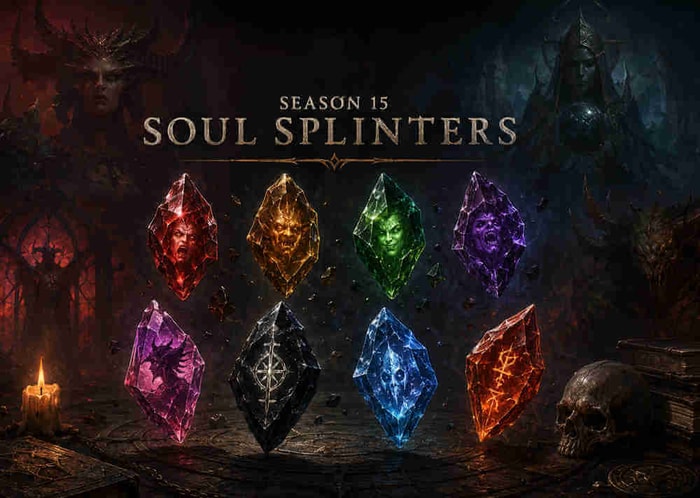
What Are Soul Splinters in Diablo 4 Season 15?
According to Blizzard’s 3.2.0 PTR preview, Soul Splinters are socketable items that can be slotted into jewelry. They come in five rarities, from Common to Unique, and can be upgraded through the Horadric Cube.
Seven Soul Splinters grant a resistance, while the Splinter of the Black Soulstone grants All Stats. Each also offers a powerful effect with a drawback, such as higher resource costs, reduced Movement Speed, no Critical Strikes, or permanent Weakened and Vulnerable status.
Here is the hidden meaning behind every Soul Splinter.
Every Soul Splinter and Its Likely Lore Connection
| Soul Splinter | Likely Lore Connection | Power and Price |
|---|---|---|
| Splinter of Anguish | Andariel, Maiden of Anguish | More Attack Speed and Critical Strike Chance, but higher resource costs. |
| Splinter of Sin | Azmodan, Lord of Sin | More Maximum Health, but a smaller resource pool. |
| Splinter of Lies | Belial, Lord of Lies | More rewards, but you are always Weakened and Vulnerable. |
| Splinter of Pain | Duriel, Lord of Pain | More defense, but you lose 30% Movement Speed. |
| Splinter of the Mother | Lilith, the Blessed Mother | Unhindered movement and Vulnerable application, but touching too many enemies leaves you Stunned. |
| Splinter of the Black Soulstone | Diablo III’s Black Soulstone | More souls mean more damage—and more danger. |
| Splinter of Damnation | Skarn, Lord of Damnation | Killing an Elite Pack temporarily raises Monster Power. |
| Splinter of Hellfire | Na-Krul and Diablo: Hellfire | Huge damage, but you lose 100% Critical Strike Chance. |
The most creative example may be the Splinter of Lies. Its increased Gold and crafting material drop rates, plus Bonus Experience, make it look like the perfect farming option. The catch is that the player remains Weakened and Vulnerable at all times.
It is exactly the kind of offer players should expect from Belial: highly tempting, technically truthful, and much more dangerous than it first appears.
Lilith Offers Freedom—Then Takes It Away
The Splinter of the Mother clearly points to Lilith, the Blessed Mother. It makes the player Unhindered and causes enemies they touch to become Vulnerable, but touching too many enemies eventually leaves the player Stunned for four seconds.
The effect mirrors Lilith’s role in Diablo 4. She promises freedom from humanity’s limitations, only for that freedom to become another form of control. The Splinter lets players charge through enemies before suddenly taking that control away.
The Black Soulstone Still Demands a Price
The Splinter of the Black Soulstone recalls the artifact at the center of much of Diablo III’s story. Its flavor text points to Zoltun Kulle, while the Soulstone later became central to Malthael’s plan in Reaper of Souls.
On the 3.2.0 PTR, each enemy killed grants a soul stack lasting 15 seconds. Every active soul increases the player’s damage but also increases the damage they receive. Just like the original artifact, the Splinter offers enormous power while making its owner increasingly vulnerable.
The Two References Most Players May Miss
Splinter of Damnation Appears to Reference Skarn
Damnation may sound like a generic demonic name, but it appears to point to Skarn, Lord of Damnation, the main antagonist of Diablo Immortal’s launch campaign.
Datamined PTR item data strengthens that connection by listing the Unique-quality version as Abyssal Splinter of Skarn and attributing its flavor text to Skarn. Blizzard’s Diablo Immortal material uses Lord of Damnation as his official title.
Its effect temporarily increases Monster Power after the player kills an Elite Pack. Instead of simply rewarding a victory, the Splinter makes the following fights more dangerous—a fitting effect for the Lord of Damnation.
Splinter of Hellfire Appears to Hide a Na-Krul Easter Egg
The most obscure reference belongs to the Splinter of Hellfire. Its flavor text contains three phrases:
In Spiritu Sanctum. Praedictum Otium. Efficio Obitus Ut Inimicus.
These phrases match the three incantations used to weaken Na-Krul, the final boss of Diablo: Hellfire. This makes the Splinter a remarkably deep Easter egg from Diablo: Hellfire, the original game’s expansion.
Which Soul Splinters Look Most Useful?
The best choice depends on your build, resource recovery, and whether your current Diablo 4 items can help manage a Soul Splinter’s drawback. Based on the effects shown on the 3.2.0 PTR:
- Farming and leveling: Lies offers Gold, materials, and Bonus Experience, provided your build can survive its penalties.
- Defense: Pain provides Damage Reduction, while Sin greatly increases Maximum Health.
- Damage: Anguish supports Crit builds, Hellfire favors non-Crit setups, and the Black Soulstone rewards constant enemy kills.
- Mobility and difficulty: Mother favors fast close-range gameplay, while Damnation is designed for players who want escalating fights.
These are early observations rather than final recommendations. Blizzard may still adjust the values or effects before Season 15 launches.
Final Thoughts
Soul Splinters turn Diablo lore into gameplay. Belial’s reward hides a trap, Duriel trades speed for durability, Lilith grants freedom before taking control away, and the Black Soulstone makes every captured soul both a weapon and a risk.
The numbers may change before Season 15 begins, but the theme is already clear: power connected to the Burning Hells always comes with a price.